The Shift from Physical to Digital Pathology
Traditional pathology struggles with delays and inefficiencies. Discover how digital solutions improve speed, storage, and collaboration.
Table of Contents
Introduction
Anatomical pathology (AP) underpins accurate diagnoses in oncology, infectious diseases, and countless other medical specialties. Yet most facilities still operate with physical slides, often grappling with logistical headaches, potential sample degradation, and time-consuming collaboration hurdles. As the global healthcare sector embraces digital transformation, digital pathology emerges as a dynamic way to improve efficiency and accuracy—building on clear evidence from major institutions in the US, UK, Europe, and now Australia.
Operational Hurdles in Physical Anatomical Pathology
One persistent challenge is the time needed for slide preparation and transport. Samples frequently move between buildings, hospitals, or even across international borders to ensure the right subspecialist sees them. A prominent US clinical network reported that standard mailing of slides resulted in a 72-hour delay, creating diagnostic bottlenecks. Similarly, the UK’s NHS consolidation projects highlight how cross-lab slide transport prolongs the wait for pathology input needed by multidisciplinary teams.
Archival inefficiencies also present hurdles. Labs store physical slides in bulky archives, which can be prone to mislabeling or misfiling. Over time, repeated handling or exposure to variations in temperature and humidity can degrade slide quality. As such, second-opinion requests often require sending or tracking down these fragile physical slides, risking further damage and incurring delays.
Quality & Collaboration Concerns
Pathologists often need rapid consultations on complex cases. With physical slides, they must mail them to sub-specialists—sometimes halfway around the world—before receiving a definitive diagnosis. This prolonged turnaround impacts not only lab workflows, but also time-sensitive patient care decisions. Real-time case discussions become almost impossible.
Additionally, physical processes tend to introduce the risk of human error, such as mislabeling slides or mixing up specimens. While robust protocols exist, they are not immune to human fallibility, making standardization more difficult to enforce.
How Digital Pathology Transforms the Landscape
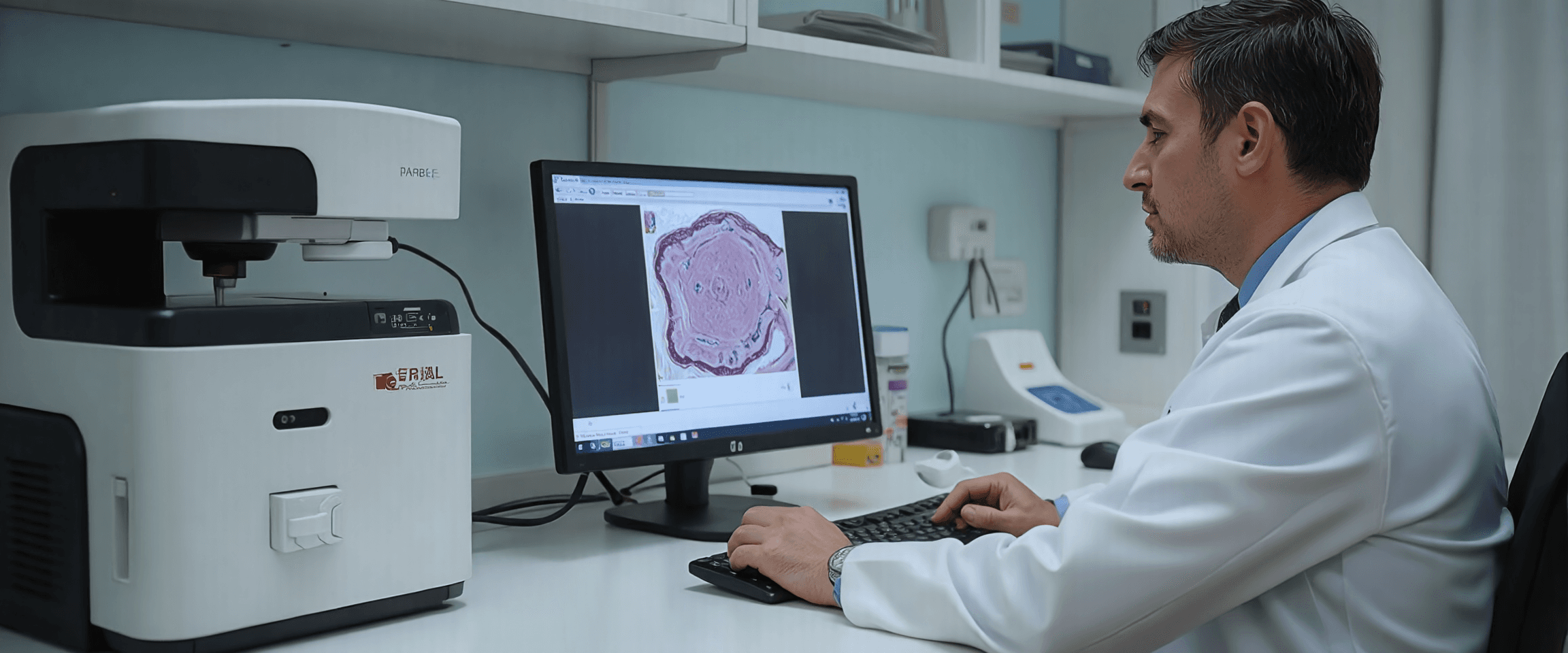
By converting glass slides into high-resolution digital files, labs reduce the reliance on physical slide handling and shipping. Pathologists can instantly share these images through secure, cloud-based systems—slashing turnaround times from days to mere hours. Leeds Teaching Hospitals in the UK, for example, reported markedly improved referral times after rolling out a digital pathology network.
Equally important, digital workstations enable pathologists to zoom in on regions of interest, measure tissue structures more precisely, and collaborate seamlessly within minutes—enhancing diagnostic confidence and minimizing the need for physical slide circulation.
Security, Compliance, and the Indian Context
In India, digital pathology services must comply with NABL (112A) guidelines and the Digital Personal Data Protection (DPDP) Act of 2023. This Act was enacted to establish a comprehensive framework for the protection of personal data in India, marking a significant step toward safeguarding digital rights and ensuring accountability in data usage. The legislation applies to both government and private entities and introduces several key provisions regarding the collection, processing, and storage of personal data. Rather than being barriers, these regulations help ensure patient data security and uphold high clinical standards. Leading digital pathology vendors such as TheiaDx to invest heavily in secure hosting, encrypted data channels, and regulatory-friendly workflows to meet both Indian and international requirements.
Real-World Successes
Leeds Teaching Hospitals (UK): Reduced slide referral times from days to hours via a networked digital platform.
University Hospital of Cologne (Germany): Reported fewer labeling errors and improved archival processes when adopting fully digital workflows.
These institutions highlight how digital pathology not only upgrades day-to-day clinical operations, but also strengthens partnerships among geographically dispersed teams.
Why TheiaDx?
Against this backdrop, TheiaDx stands out for its end-to-end digital pathology offering. The platform hosts scanned slides on secure cloud servers, provides advanced digital tools for slide examination, and enables near-instant collaboration among pathologists, surgeons, and oncologists locally and internationally. Indian labs in particular, Theia’s solutions comply with NABL-112A & DPDP standards of 2023, safeguarding patient confidentiality while promoting consistency in results. Implementing TheiaDx shortens turnaround, enhances diagnostic precision, and fosters a robust digital archive that can be tapped for research and second opinions.
Conclusion
From logistical burdens to quality control concerns, physical anatomical pathology faces hurdles incompatible with modern healthcare’s demands for speed and accuracy. Digital pathology offers an evidence-backed solution cutting turnaround times, improving collaboration, and providing streamlined diagnostic tools. Early adopters in the US, UK, and Europe have reported measurable benefits, ranging from faster therapy decisions to heightened diagnostic confidence. By embracing platforms like TheiaDx, Indian surgical pathology services can usher in a new era of efficiency and patient-centric care, transforming once-cumbersome workflows into cohesive, future-ready systems.
